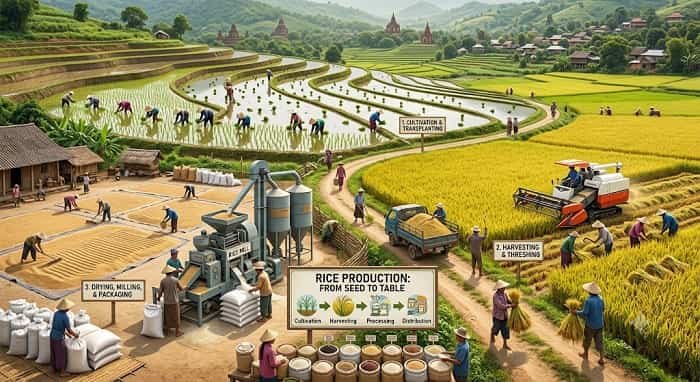
Rice is not just another grain in a field. It is steam rising from a hot plate, the comfort of dal-chawal, biryani, fried rice, sushi, khichdi, rice cakes and countless traditional meals across Asia, Africa and beyond. For billions of people, rice is not a side dish; it is the main food that completes the meal.
In 2026, rice production remains heavily dominated by Asian countries. The ranking below is based on the latest available 2025/26 production estimates on a milled rice basis, where India has moved ahead of China with a record output of about 154.02 million metric tons. USDA/FAS production data places India, China, Bangladesh, Indonesia, Vietnam and Thailand among the biggest names in global rice production.
Now let’s check out the top 10 largest producers of rice in the world in 2026.
1. India – Around 154.02 Million Metric Tons
India is now the world’s largest rice producer, supported by huge farming areas, strong monsoon agriculture and rising productivity.
India ranks first in global rice production in 2026. Rice is grown across states like West Bengal, Uttar Pradesh, Punjab, Andhra Pradesh, Telangana, Odisha, Chhattisgarh, Tamil Nadu, Bihar and Assam. It is deeply linked with Indian food culture, from plain rice and khichdi to biryani, dosa, idli and poha. Strong irrigation, high-yielding varieties and government support have helped India reach record production.
2. China – Around 146.33 Million Metric Tons
China remains a rice giant because the crop is central to its food security and daily diet.
China takes second place among the largest rice producers. Major rice-growing regions include Hunan, Jiangxi, Hubei, Sichuan, Guangdong, Guangxi and Heilongjiang. Rice is a staple food in many parts of China and is used in steamed rice, noodles, congee and rice-based dishes. Though China produces a huge quantity, most of it is consumed within the country.
3. Bangladesh – Around 37.65 Million Metric Tons
Bangladesh produces rice on a massive scale because rice is the heart of its national diet.
Bangladesh ranks third in the world. The country has limited land compared with India or China, but rice farming is extremely intensive. Farmers grow multiple rice crops in a year, including Aus, Aman and Boro. Fertile delta lands, river systems and irrigation help the country maintain strong production. Rice is eaten daily by most households, making it vital for food security.
4. Indonesia – Around 33.8 Million Metric Tons
Indonesia’s rice production is driven by its large population and strong domestic need for food security.
Indonesia is one of Southeast Asia’s largest rice producers. Java, Sumatra, Sulawesi and other islands have major paddy-growing regions. Rice is the main food for most Indonesians, so the government gives high importance to local production. The country still imports rice in some years, but its domestic crop remains one of the largest in the world.
5. Vietnam – Around 26.2 Million Metric Tons
Vietnam is important not only as a producer but also as one of the world’s strongest rice exporters.
Vietnam ranks fifth in rice production. The Mekong Delta and Red River Delta are the country’s biggest rice-growing regions. Vietnamese farmers are known for high productivity and multiple cropping seasons. Rice is also a major export product for Vietnam, with strong demand from Asian and African markets. Its fragrant rice and white rice varieties are well known internationally.
6. Thailand – Around 20.7 Million Metric Tons
Thailand is famous for premium rice varieties, especially jasmine rice, which has strong global demand.
Thailand stands sixth among the largest rice producers. Rice is grown mainly in the central plains, northeastern region and northern provinces. Thai jasmine rice is one of the country’s most valuable agricultural products. Even though Thailand produces less than India, China or Vietnam, it remains a major name in the global rice trade because of quality and export reputation.
7. Philippines – Around 12.2 Million Metric Tons
The Philippines produces large quantities of rice, but strong domestic demand keeps the country dependent on imports.
The Philippines ranks seventh in global rice production. Major rice-growing areas include Central Luzon, Cagayan Valley, Western Visayas and Mindanao. Rice is the main staple food in the country, eaten with almost every meal. However, climate risks, typhoons and limited land often affect production, so the Philippines continues to import rice to meet domestic needs.
8. Myanmar/Burma – Around 12 Million Metric Tons
Myanmar has a long rice-growing tradition and remains one of Southeast Asia’s key producers.
Myanmar, also called Burma in many trade datasets, ranks eighth in rice production. The Irrawaddy Delta is the country’s most important rice-growing region. Rice is both a daily food and an export crop. Myanmar has the natural advantage of fertile land and river systems, though challenges like infrastructure, milling quality and market access still affect its full potential.
9. Pakistan – Around 9.4 Million Metric Tons
Pakistan is known globally for basmati rice and remains an important producer and exporter.
Pakistan takes ninth place among the largest rice-producing countries. Punjab and Sindh are the main rice-growing provinces. The country produces both basmati and non-basmati rice, with basmati being especially valued in export markets. Rice is also one of Pakistan’s key agricultural exports, bringing foreign exchange and supporting millions of farmers and traders.
10. Cambodia – Around 8.2 Million Metric Tons
Cambodia is a rising rice producer with growing recognition for fragrant and premium rice varieties.
Cambodia completes the list of the top 10 largest rice producers in the world. Rice farming is central to rural life and the national economy. The Mekong river system and seasonal rainfall support paddy cultivation across the country. Cambodian fragrant rice has gained international attention, helping the country build a stronger identity in the global rice market.
Final Words
Rice is more than a crop; it is daily food, culture, trade and national security. India and China dominate the world’s rice basket, while Bangladesh, Indonesia, Vietnam and Thailand form the strong Asian production belt. The Philippines, Myanmar, Pakistan and Cambodia also play important roles. In 2026, these countries continue to feed billions and shape the future of the global rice market.