Aluminium is the light metal that quietly sits inside modern life. It is in aircraft, cars, trains, window frames, power lines, kitchen foil, drink cans, solar panels, machines, smartphones and construction materials. It is strong, light, recyclable and useful in almost every major industry. That is why aluminium production shows how powerful a country’s industrial base really is.
For this 2026 ranking, the figures are based on primary aluminium smelter production, not bauxite mining or alumina production. USGS Mineral Commodity Summaries 2026 reports world primary aluminium smelter production at about 74 million metric tons in 2025, with China far ahead of every other producer.
Now let’s check out the top 10 largest producers of aluminium in the world in 2026.
1. China – Around 45 Million Metric Tons
China dominates aluminium production because it has massive smelting capacity and huge industrial demand.
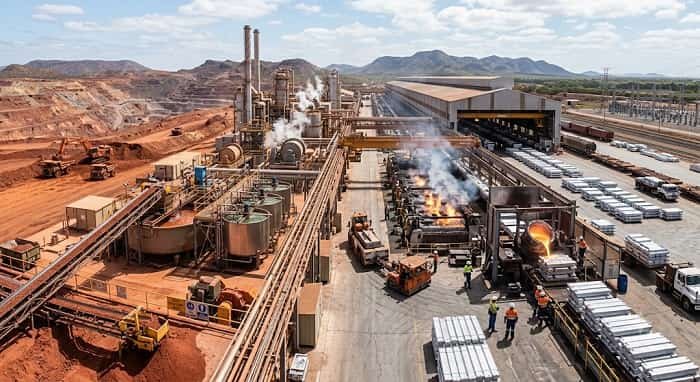
China is the largest aluminium producer in the world by a very wide margin. Its aluminium industry supports construction, transport, electrical equipment, packaging, machinery and renewable energy projects. Provinces such as Yunnan, Guangxi, Qinghai, Guizhou and Sichuan are important in the country’s smelting network. In 2025, China’s primary aluminium output was estimated at 45 million metric tons.
2. India – Around 4.2 Million Metric Tons
India is the second-largest aluminium producer, supported by bauxite resources, power supply and growing domestic demand.
India ranks second in global aluminium production. The country’s aluminium industry is linked with power, construction, railways, automobiles, packaging and electrical sectors. Odisha, Chhattisgarh and Jharkhand are important regions because of mineral resources and smelting facilities. India’s output stood at about 4.2 million metric tons, placing it clearly behind China but ahead of Russia.
3. Russia – Around 3.9 Million Metric Tons
Russia remains a major aluminium producer because of its large smelters, energy resources and export-oriented industry.
Russia ranks third among the largest aluminium producers in the world. The country has long been an important supplier of primary aluminium to global markets. Its smelters benefit from access to energy and raw material supply chains. Despite trade pressure and sanctions, Russia’s aluminium industry remains one of the strongest in the world, with production near 3.9 million metric tons.
4. Canada – Around 3.3 Million Metric Tons
Canada is a major aluminium producer because of its clean hydropower-backed smelting industry.
Canada takes fourth place in the global ranking. Quebec is the heart of the country’s aluminium production, with smelters powered largely by hydroelectricity. This gives Canadian aluminium a strong position in markets looking for lower-carbon metal. Canada produced around 3.3 million metric tons of primary aluminium in the latest estimate.
5. United Arab Emirates – Around 2.7 Million Metric Tons
The UAE has become a powerful aluminium producer through modern smelters and strong export networks.
The United Arab Emirates ranks fifth in the world. Emirates Global Aluminium is one of the major names in the sector, and aluminium has become an important part of the UAE’s non-oil industrial economy. The country exports aluminium to many global markets and uses it in construction, transport and manufacturing. Its production is estimated at about 2.7 million metric tons.
6. Bahrain – Around 1.6 Million Metric Tons
Bahrain is a small country by size, but its aluminium industry is globally significant.
Bahrain ranks sixth among the largest aluminium producers. Aluminium Bahrain, known as Alba, is one of the world’s major aluminium smelters. The industry plays a key role in Bahrain’s economy, supporting exports, jobs and downstream manufacturing. With production near 1.6 million metric tons, Bahrain has a much bigger aluminium profile than its land size suggests.
7. Australia – Around 1.5 Million Metric Tons
Australia’s aluminium strength comes from its bauxite, alumina and long-established smelting chain.
Australia ranks seventh in primary aluminium production. The country is also one of the world’s most important bauxite and alumina producers, giving it a strong upstream advantage. Aluminium is used in transport, construction, packaging and export industries. Australia’s smelter production was estimated at around 1.5 million metric tons.
8. Norway – Around 1.3 Million Metric Tons
Norway is known for high-quality aluminium production supported by renewable hydropower.
Norway holds eighth place in the world. Its aluminium industry benefits from abundant hydroelectric power, which helps reduce the carbon footprint of production. Norwegian aluminium is important for automotive, construction, packaging and industrial uses. The country produced about 1.3 million metric tons of primary aluminium.
9. Brazil – Around 1.2 Million Metric Tons
Brazil remains an important aluminium producer because of its raw material base and industrial market.
Brazil ranks ninth among the largest aluminium producers. The country has strong bauxite reserves and an established aluminium value chain. Aluminium is used in transport, packaging, construction, electrical goods and machinery. Brazil’s primary aluminium production was estimated at around 1.2 million metric tons.
10. Malaysia – Around 1.1 Million Metric Tons
Malaysia completes the top 10 with steady smelter production and growing industrial importance in Asia.
Malaysia ranks tenth in the world. Its aluminium sector has grown with industrial development, energy supply and export demand. Malaysian aluminium supports regional manufacturing, construction and trade. With production around 1.1 million metric tons, the country remains one of Asia’s notable aluminium producers.
Final Words
Aluminium production in 2026 is clearly led by China, which produces more than half of the world’s primary aluminium. India, Russia, Canada and the UAE form the next major group, while Bahrain, Australia, Norway, Brazil and Malaysia complete the top 10. As demand rises from electric vehicles, solar energy, packaging, aircraft and construction, aluminium will remain one of the most important metals in the global economy.