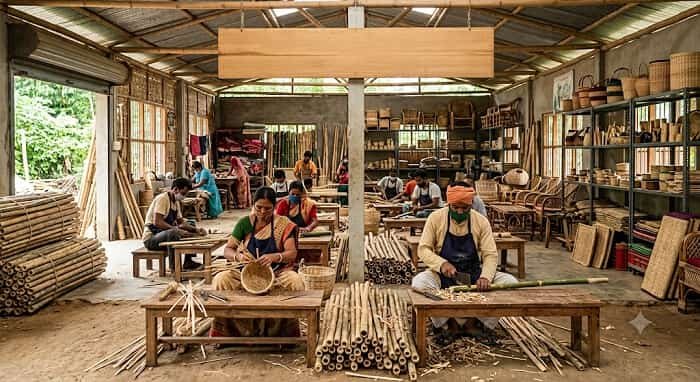
Cotton begins its journey as a soft white fibre in the field, but it does not stay there for long. It travels into spinning mills, turns into yarn, becomes fabric, and finally reaches homes as shirts, bedsheets, towels, denim, dresses and many everyday products. Few crops touch human life so closely. Cotton is not only a farm crop; it is the backbone of the textile industry.
In 2026, cotton production is led by a small group of powerful farming nations. According to USDA’s June 2026 cotton outlook, global cotton production for the 2026/27 season is projected at about 116.04 million 480-lb bales. China, India, Brazil and the United States remain the biggest names, while Pakistan, Uzbekistan, Australia, Turkey, Argentina and Benin also hold strong positions. Now let’s checkout top 10 largest producers of cotton in the world in 2026.
1. China – Around 33.50 Million Bales
China leads the world because it combines huge cotton farming with one of the largest textile industries on Earth.
China is the largest cotton producer in the world in 2026. Its major cotton-growing region is Xinjiang, which is known for large farms, dry climate and strong irrigation support. Cotton is highly important for China’s textile, garment and export industries. The country produces a massive amount of cotton, but it also consumes a large share domestically because of its huge spinning and fabric-making sector.
2. India – Around 24.00 Million Bales
India has the world’s largest cotton-growing area and cotton remains deeply linked with its farming and textile economy.
India ranks second among the largest cotton producers in the world. Cotton is mainly grown in Gujarat, Maharashtra, Telangana, Andhra Pradesh, Madhya Pradesh, Rajasthan, Punjab and Haryana. Indian cotton supports millions of farmers, ginning units, spinning mills and garment factories. The country is also one of the biggest textile producers, so cotton has both agricultural and industrial importance.
3. Brazil – Around 17.50 Million Bales
Brazil has become a cotton powerhouse because of modern farming, high yields and strong export growth.
Brazil is now one of the fastest-rising cotton producers in the world. Its major cotton-growing areas include Mato Grosso and Bahia. Large farms, advanced machinery and strong productivity have helped Brazil become a serious competitor in the global cotton market. Brazilian cotton is also important for exports, especially as global buyers look for reliable supply outside traditional markets.
4. United States – Around 13.30 Million Bales
The United States remains a major cotton producer and one of the most influential cotton exporters.
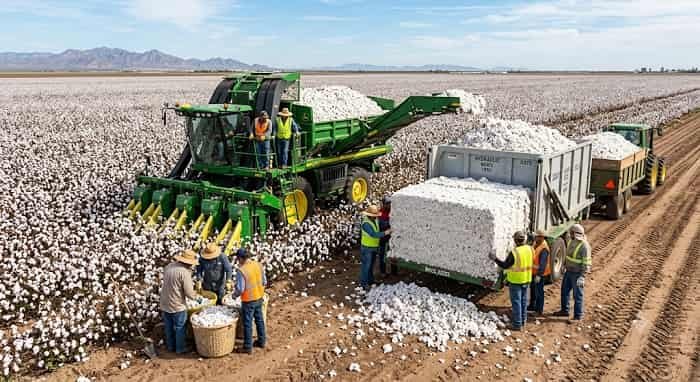
The United States holds fourth place in global cotton production. Cotton is grown mainly in Texas, Georgia, Mississippi, Arkansas, Alabama, North Carolina and other southern states. U.S. cotton is known for quality, grading systems and strong export networks. Even when production changes due to weather, the United States remains a key player in international cotton trade.
5. Pakistan – Around 5.10 Million Bales
Pakistan depends heavily on cotton because it directly supports the country’s textile and garment industry.
Pakistan is the fifth-largest cotton producer in the world. Punjab and Sindh are the main cotton-growing regions. Cotton is often called the backbone of Pakistan’s textile economy because it supports yarn, fabric, garments and exports. However, the country faces challenges from pests, heat, water stress and changing weather patterns, which can affect production from year to year.
6. Uzbekistan – Around 3.30 Million Bales
Uzbekistan remains important because cotton is closely connected with its growing textile and yarn industry.
Uzbekistan has a long history of cotton farming and continues to be one of the world’s major producers. In recent years, the country has focused more on processing cotton at home instead of exporting raw cotton. This means more cotton is used for yarn, fabric and finished textile products inside the country. Its production is supported by irrigation and state-backed agricultural reforms.
7. Australia – Around 3.00 Million Bales
Australia produces less cotton than some Asian giants, but its quality and export value make it highly important.
Australia ranks among the top cotton producers despite having a smaller farming area than India or China. Cotton is mainly grown in New South Wales and Queensland. Australian cotton farming is known for modern irrigation, technology and high productivity. Since domestic use is limited, a major part of Australian cotton is exported to Asian textile markets.
8. Turkey – Around 2.50 Million Bales
Turkey’s cotton production is important because the country has a strong textile and apparel manufacturing base.
Turkey is another major cotton-producing country in 2026. Cotton is grown mainly in regions such as the Aegean, Çukurova and Southeastern Anatolia. Turkey also has a powerful textile industry, so local cotton helps support spinning, weaving, denim, towels and garment production. Even though Turkey imports cotton too, its domestic crop remains valuable for the industry.
9. Argentina – Around 1.40 Million Bales
Argentina is South America’s second major cotton name after Brazil, with production supported by warm farming regions.
Argentina ranks ninth among the largest cotton producers. Cotton is mainly grown in northern provinces such as Chaco, Santiago del Estero and Santa Fe. The crop supports local farming communities and textile supply chains. Argentina’s cotton production is smaller than Brazil’s, but it still plays an important role in the regional cotton market.
10. Benin – Around 1.15 Million Bales
Benin is one of Africa’s leading cotton producers and cotton is a major export crop for the country.
Benin completes the list of the top 10 largest cotton producers in the world. Cotton is one of the most important crops in its economy and supports many rural households. The country’s cotton is largely export-oriented, making it a key source of income and foreign exchange. Benin also represents the growing importance of West Africa in the global cotton trade.
Final Words
Cotton connects farms, factories and fashion in one long chain. China and India lead with massive production, Brazil and the United States shape exports, while Pakistan, Uzbekistan, Australia, Turkey, Argentina and Benin add strength to the global supply. In 2026, these countries remain the main pillars of the world’s cotton basket.