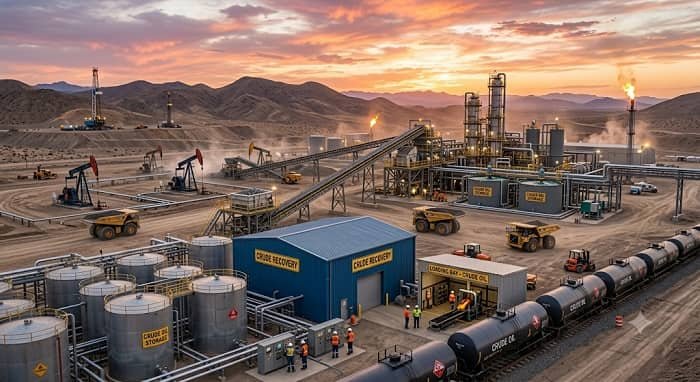
Crude oil is the raw black liquid that still keeps the world moving. It comes out of the ground, travels through pipelines and tankers, reaches refineries, and then becomes petrol, diesel, jet fuel, LPG, petrochemicals, plastics, lubricants and many industrial products. Even with electric vehicles and renewable energy growing fast, crude oil remains one of the most powerful resources in the global economy.
For this 2026 list, the ranking is based on crude oil including lease condensate, not total petroleum liquids or refined products. The latest available EIA international production data places the United States, Russia and Saudi Arabia as the top three crude oil producers, followed by Canada, Iran, China, Iraq, the UAE, Brazil and Kuwait.
Let’s check out the top 10 largest producers of crude oil in the world in 2026.
1. United States – Around 13.8 Million Barrels Per Day
The United States leads the world because of shale oil, advanced drilling and huge output from Texas and New Mexico.
The United States is the largest crude oil producer in the world. Its biggest production zones include Texas, New Mexico, North Dakota, Alaska and the Gulf of Mexico. The Permian Basin has become the main engine of American crude oil production. U.S. crude output has stayed at record levels, making the country a dominant force in global oil supply.
2. Russia – Around 10.1 Million Barrels Per Day
Russia remains a crude oil giant because of its vast fields across Siberia and long-established energy industry.
Russia ranks second in the world. Its major oil-producing regions include West Siberia, the Volga-Urals area, Eastern Siberia and the Far East. Crude oil is one of Russia’s most important export products and a major part of its economy. Even with sanctions and changing trade routes, Russia continues to remain among the world’s largest producers.
3. Saudi Arabia – Around 9.9 Million Barrels Per Day
Saudi Arabia is one of the most influential crude oil producers because of its huge reserves and export power.
Saudi Arabia stands third in crude oil production. The country is home to some of the world’s largest oil fields, including Ghawar. Saudi Aramco controls much of the country’s production and exports. Saudi Arabia also plays a key role in OPEC decisions, which often influence global crude oil prices.
4. Canada – Around 5.2 Million Barrels Per Day
Canada’s crude oil strength comes mainly from Alberta’s oil sands and steady exports to the United States.
Canada ranks fourth among the largest crude oil producers. Alberta is the heart of Canadian oil production, especially because of its oil sands. Canada also produces crude from Saskatchewan, Newfoundland and Labrador, and other regions. A large share of Canadian crude is exported to the U.S., making North America one of the strongest oil-producing regions in the world.
5. Iran – Around 4.4 Million Barrels Per Day
Iran has massive crude oil reserves and remains a major producer despite sanctions and trade restrictions.
Iran is one of the biggest crude oil producers in the Middle East. Its oil fields are mainly located in Khuzestan and other western and southern parts of the country. Crude oil is extremely important for Iran’s economy, exports and government revenue. Production can change due to sanctions, investment limits and geopolitical pressure, but Iran still holds a strong global position.
6. China – Around 4.3 Million Barrels Per Day
China produces a large amount of crude oil, but its demand is so high that it still depends heavily on imports.
China ranks sixth in crude oil production. Major producing fields include Daqing, Shengli, Changqing and several offshore fields. China’s domestic crude production supports its energy security, but the country consumes far more oil than it produces. This is why China remains one of the world’s largest crude oil importers.
7. Iraq – Around 4.2 Million Barrels Per Day
Iraq has some of the richest oil fields in the world and depends heavily on crude exports.
Iraq stands seventh among the largest crude oil producers. Its major oil fields include Rumaila, West Qurna, Zubair and Kirkuk. Crude oil is the backbone of Iraq’s economy and government income. With better infrastructure and political stability, Iraq has the potential to increase production further in the coming years.
8. United Arab Emirates – Around 4.1 Million Barrels Per Day
The UAE is a strong crude oil producer, with Abu Dhabi holding most of the country’s oil wealth.
The United Arab Emirates ranks eighth in the world. Abu Dhabi is the main centre of crude oil production, and ADNOC is the key company behind the sector. The UAE has invested heavily in modern oil fields, refining and export infrastructure. Oil continues to support its economy, even as the country also grows tourism, finance and clean energy.
9. Brazil – Around 3.8 Million Barrels Per Day
Brazil is rising fast because of its deepwater offshore crude oil fields.
Brazil ranks ninth among the top crude oil producers. Its biggest strength comes from offshore pre-salt fields in the Atlantic Ocean. Petrobras plays a major role in exploration and production. Brazil has become one of the most important non-OPEC crude oil producers, and its output is expected to remain strong due to deepwater development.
10. Kuwait – Around 2.6 Million Barrels Per Day
Kuwait completes the top 10 with large reserves and a deeply oil-dependent economy.
Kuwait is one of the oldest major crude oil producers in the Gulf region. The Burgan field is one of its most famous and important oil fields. Crude oil supports a large share of Kuwait’s exports, revenue and national income. Though smaller than Saudi Arabia or Iraq, Kuwait remains a key producer in the global oil market.
Final Words
Crude oil production in 2026 is still led by a small group of powerful energy nations. The United States is far ahead at the top, while Russia and Saudi Arabia remain close behind. Canada, Iran, China, Iraq, the UAE, Brazil and Kuwait complete the top 10. These countries do not just produce oil; they influence fuel prices, trade routes, energy security and the daily movement of the world economy.