Iron ore is the rough, reddish-brown backbone of modern industry. Before a skyscraper rises, before a railway line is laid, before a ship, car, bridge or factory machine takes shape, iron ore begins the story. It is mined from deep pits and rocky hills, crushed, processed, shipped to steel plants, and finally transformed into the steel that holds the modern world together.
For this 2026 ranking, the latest USGS Mineral Commodity Summaries 2026 data has been used. The data is based on usable iron ore production, not iron content or reserves. USGS estimates global usable iron ore production at around 2.6 billion metric tons, with Australia, Brazil, India and China leading the world.
Now let’s move country by country through the top 10 largest producers of iron ore in the world in 2026.
1. Australia – Around 980 Million Metric Tons
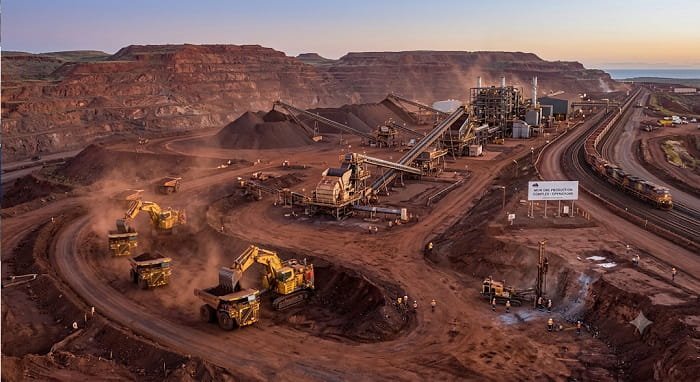
Australia is the iron ore capital of the world, powered by huge mines and massive export shipments to Asia.
Australia ranks first by a very large margin. The Pilbara region in Western Australia is one of the richest iron ore mining zones on Earth. Companies like Rio Tinto, BHP and Fortescue play a major role in production and exports. Australian iron ore is especially important for China, Japan, South Korea and other steel-making nations. USGS estimates Australia’s usable iron ore production at about 980 million metric tons.
2. Brazil – Around 420 Million Metric Tons
Brazil stands strong because of its high-grade iron ore and world-famous mining regions.
Brazil is the second-largest iron ore producer in the world. The country’s mining strength comes mainly from Minas Gerais and Pará, especially the Carajás mining region. Brazilian iron ore is known for good quality and is widely exported to global steel markets. Vale remains one of the biggest names in the international iron ore industry. Brazil’s production is estimated at around 420 million metric tons.
3. India – Around 310 Million Metric Tons
India’s iron ore production is rising because of strong steel demand and rapid infrastructure growth.
India ranks third in global iron ore production. Odisha is the largest iron ore-producing state, while Chhattisgarh, Karnataka, Jharkhand and Goa also play important roles. Iron ore is the base of India’s expanding steel sector, which supports roads, railways, housing, automobiles and manufacturing. USGS places India’s output at about 310 million metric tons, showing its growing importance in the world market.
4. China – Around 290 Million Metric Tons
China produces a huge amount of iron ore, but its giant steel industry still depends heavily on imports.
China ranks fourth among the largest producers. Major mining areas include Hebei, Liaoning, Sichuan, Inner Mongolia and Shanxi. China is the world’s largest steel producer, so its demand for iron ore is enormous. Even with large domestic production, much of China’s steel industry relies on imported ore from Australia and Brazil. Its usable iron ore production is estimated at around 290 million metric tons.
5. Iran – Around 93 Million Metric Tons
Iran has become a major iron ore producer because of its strong domestic steel ambitions and mineral base.
Iran holds fifth place in this ranking. Important iron ore regions include Yazd, Kerman and Khorasan. The country uses much of its iron ore for its own steel industry, which has expanded over the years. Iran’s mining sector is important for construction, industry and regional supply. Its usable iron ore output is estimated at about 93 million metric tons.
6. Russia – Around 86 Million Metric Tons
Russia remains a major producer because of its large mineral reserves and long-established steel industry.
Russia ranks sixth in iron ore production. Major iron ore deposits are found in areas such as Kursk Magnetic Anomaly, Ural region and Siberia. Russian iron ore supports domestic steel plants, machinery, defence, rail and infrastructure sectors. Though trade pressure and sanctions affect some export routes, Russia remains a strong mining nation with output near 86 million metric tons.
7. Canada – Around 69 Million Metric Tons
Canada is known for reliable iron ore production, especially from Labrador and Quebec.
Canada ranks seventh in the world. The Labrador Trough is one of its most important iron ore zones, stretching through Quebec and Newfoundland and Labrador. Canadian iron ore is used in domestic steelmaking and also exported to international markets. Its mining industry benefits from stable regulations, strong infrastructure and high-quality resources. USGS estimates Canada’s production at around 69 million metric tons.
8. South Africa – Around 66 Million Metric Tons
South Africa is Africa’s leading iron ore producer and an important supplier to global steel markets.
South Africa stands eighth among the top iron ore producers. The Northern Cape, especially the Sishen area, is the heart of the country’s iron ore mining. South African iron ore is important for exports, particularly to Asian markets. The sector supports jobs, rail transport and port activity. Its production is estimated at about 66 million metric tons.
9. Ukraine – Around 52 Million Metric Tons
Ukraine remains a significant iron ore producer despite serious war-related challenges.
Ukraine ranks ninth in global iron ore production. The Kryvyi Rih basin is the country’s most famous iron ore region and has supported its steel industry for decades. War, damaged infrastructure and transport problems have affected mining and exports, but Ukraine still remains part of the world’s top 10. Its usable iron ore production is estimated at around 52 million metric tons.
10. United States – Around 38 Million Metric Tons
The United States completes the top 10 with iron ore mainly used for its domestic steel industry.
The United States ranks tenth in 2026. Most U.S. iron ore production comes from Minnesota and Michigan, especially the Lake Superior region. The ore is often processed into pellets for steel plants. USGS notes that the United States produced about 38 million metric tons of iron ore in 2025, lower than the previous year due to mine idling and stockpile reduction.
Final Words
Iron ore is the starting point of steel, and steel is the frame of development. Australia dominates the world by a huge margin, Brazil holds second place with high-grade ore, while India and China show the strong connection between mining and steel demand. Iran, Russia, Canada, South Africa, Ukraine and the United States complete the top 10, making iron ore one of the most important industrial minerals in the world.