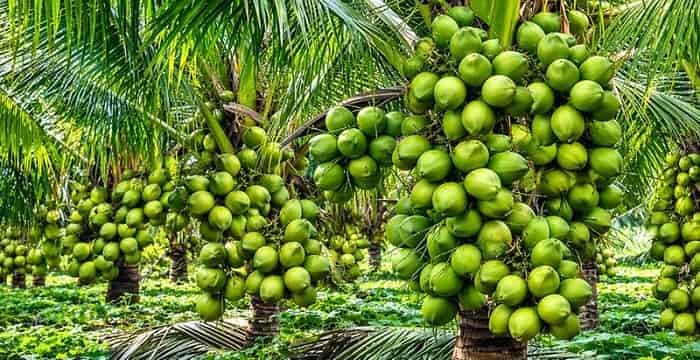
Coconut is one of those crops where nothing really goes to waste. The water is drunk fresh, the white kernel becomes food, milk and oil, the shell turns into charcoal and handicrafts, and the husk becomes coir for ropes, mats, brushes and growing media. That is why the coconut tree is often called the “tree of life” in many tropical countries.
The ranking is based on coconuts in shell production, not coconut oil, copra or exports. FAOSTAT’s latest 2024 data shows world coconut production at about 65.5 million tonnes, led mainly by Indonesia, India and the Philippines, which together produce around 73% of the global total.
Now let’s check out the top 10 largest producers of coconut in the world in 2026.
1. Indonesia – Around 18 Million Metric Tons
Indonesia leads the world because coconut farming is spread widely across its tropical islands.
Indonesia is the largest coconut producer in the world. The crop is grown in many regions, including Sulawesi, Sumatra, Java and eastern Indonesia. Coconuts are used for food, coconut milk, oil, copra, charcoal and export products. With ideal tropical weather and a long coastline, Indonesia remains the strongest name in global coconut production.
2. India – Around 14.7 Million Metric Tons
India is a coconut powerhouse, with strong production, high productivity and deep cultural use of the crop.
India ranks second in coconut production according to FAOSTAT 2024, contributing about 22.44% of global production. The crop supports around 30 million people in India, including nearly 10 million farmers. Major producing states include Tamil Nadu, Karnataka, Kerala and Andhra Pradesh. Coconut is used in cooking, worship, oil, sweets, chutney, coir and many value-added products.
3. Philippines – Around 14.5 Million Metric Tons
The Philippines remains one of the world’s great coconut nations and a major exporter of coconut products.
The Philippines ranks third among the largest coconut producers. Coconut farming is spread across many islands and supports millions of rural households. The country is especially important in coconut oil, desiccated coconut, copra and other processed coconut exports. For many Filipino farmers, coconut is not just a crop but a long-term source of livelihood.
4. Brazil – Around 3.2 Million Metric Tons
Brazil is the largest coconut producer in Latin America and a strong domestic coconut market.
Brazil holds fourth place in global coconut production. The crop is grown mainly in the northeast and coastal regions, where the warm climate supports coconut palms. Brazil uses coconuts for fresh consumption, coconut water, food processing and local markets. Its production is much smaller than the top three countries, but it still leads the Latin American region.
5. Sri Lanka – Around 1.8 Million Metric Tons
Sri Lanka has one of the world’s most established coconut industries, with strong use in food, oil and exports.
Sri Lanka ranks fifth among the largest coconut producers. Coconut is deeply linked with Sri Lankan cooking, especially in curries, sambols, milk and oil. The country also has a long history of coconut research and industry development. Coconut-based exports such as desiccated coconut, coir, fibre products and coconut oil remain important for the economy.
6. Vietnam – Around 1.7 Million Metric Tons
Vietnam is rising fast in coconut processing, especially coconut water, milk and value-added products.
Vietnam is one of Asia’s important coconut producers. The Mekong Delta, especially Ben Tre province, is famous for coconut cultivation. Vietnamese coconuts are used in food, drinks, coconut milk, oil, sweets and export products. In recent years, Vietnam has gained attention for processed coconut products and better export branding.
7. Mexico – Around 1.2–1.3 Million Metric Tons
Mexico is a key coconut producer in the Americas, supported by tropical coastal farming belts.
Mexico ranks among the top coconut-producing countries in the world. Coconut is grown in coastal states such as Guerrero, Colima, Michoacán and Tabasco. The crop is used for fresh coconut, coconut water, oil and local food industries. Mexico’s location also gives it access to North American markets.
8. Papua New Guinea – Around 1.1–1.2 Million Metric Tons
Papua New Guinea’s coconut sector is important for rural livelihoods and traditional farming systems.
Papua New Guinea is one of the major coconut producers in the Pacific region. Coconut trees are commonly grown in coastal and island communities. The crop is used for food, oil, copra and local trade. Though the country’s industry is smaller than Indonesia or the Philippines, coconuts remain important for village economies.
9. Myanmar – Around 1 Million Metric Tons
Myanmar remains a notable coconut producer in Southeast Asia, mainly serving local food and oil demand.
Myanmar produces coconuts in its coastal and delta regions. The crop is used in cooking, desserts, coconut milk and oil. Coconut farming supports small farmers and local markets. Its production is not as export-focused as the Philippines or Indonesia, but it still keeps Myanmar among the world’s top coconut-producing countries.
10. Thailand – Around 800,000–1 Million Metric Tons
Thailand completes the top 10 with strong demand for fresh coconuts and coconut-based food products.
Thailand is well known for aromatic coconuts, tender coconut water and coconut milk used in Thai cuisine. Coconut farming is common in southern and central regions. Thai coconuts are popular in domestic markets as well as international food and beverage industries. The country may not produce as much as the top three, but its coconut quality and branding are strong.
Final Words
Coconut production in 2026 is clearly led by Indonesia, India and the Philippines. These three countries dominate the global coconut basket, while Brazil, Sri Lanka, Vietnam, Mexico, Papua New Guinea, Myanmar and Thailand complete the top 10. From food and oil to coir and coconut water, this crop continues to support tropical economies and millions of farming families around the world.