Electric vehicles are no longer a small experiment in India. From scooters and motorcycles to SUVs, buses, three-wheelers and fleet vehicles, EVs are now becoming a serious part of Indian roads. Rising fuel prices, better battery range, more charging points and government support have pushed many buyers toward electric mobility.
India’s EV market is different because two-wheelers dominate the volume, while electric cars are growing fast in cities. Some companies are strong in electric scooters, some in electric SUVs, and some in commercial electric vehicles. For this 2026 list, the ranking is based on market presence, manufacturing strength, product range, brand value, EV focus and future growth plans.
Now let’s check out the top 10 electric vehicle manufacturing companies in India in 2026.
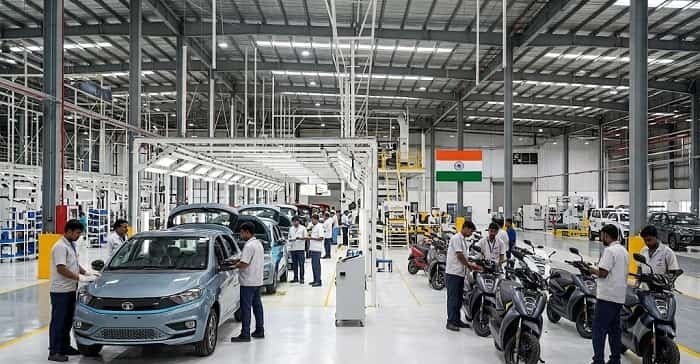
1. Tata Motors / Tata.ev
Tata Motors deserves the first position because it made electric cars more common for Indian buyers. Through Tata.ev, the company offers models such as Tiago.ev, Punch.ev, Nexon.ev, Curvv.ev, Harrier.ev and Sierra.ev. The company has built a strong EV identity in both affordable and premium electric SUV segments.
Tata’s biggest strength is its early lead, practical pricing and wide service network. The launch of newer EVs like Harrier.ev and Sierra EV has also helped Tata move beyond small electric cars into stronger SUV categories. The Sierra EV was launched in 2026 with prices starting at ₹18.79 lakh, showing Tata’s push into the modern electric SUV market.
2. Mahindra & Mahindra
Mahindra has entered the EV race with a clear focus on born-electric SUVs. Its important electric models include BE 6, XEV 9e and XEV 9S. These vehicles are based on Mahindra’s INGLO electric platform and are designed as electric SUVs from the beginning, not just converted petrol or diesel cars.
Mahindra is important because India’s SUV market is very strong, and the company already has deep trust in this category. The XEV 9S launch strengthened Mahindra’s EV lineup, while Reuters reported that Mahindra plans major EV investment through FY2027 for electric-origin SUVs.
3. Ola Electric
Ola Electric changed the Indian electric scooter market with its S1 range. The company manufactures electric scooters and has also entered electric motorcycles through models like the Roadster series. Its Futurefactory in Tamil Nadu made Ola one of the most discussed EV manufacturers in India.
Ola’s importance comes from scale, brand visibility and its battery-cell ambitions. In 2026, Ola planned to invest around $208.5 million in its EV and battery cell units to reduce costs, improve automation and localise battery production.
4. TVS Motor Company
TVS Motor has grown strongly through the TVS iQube electric scooter. Unlike some new EV startups, TVS has decades of manufacturing experience, a trusted service network and deep reach in Indian towns and cities. This gives it a major advantage in the electric scooter market.
In June 2026, TVS was reported as the top electric two-wheeler seller with 44,474 units and 24.5% market share. The company also reported record quarterly sales in Q1 FY2026-27, helped by demand across segments, including electric vehicles.
5. Bajaj Auto
Bajaj Auto is one of India’s most respected two-wheeler and three-wheeler manufacturers. Its Chetak electric scooter has helped the company enter the EV market with a strong heritage name. The Chetak brand is trusted, and Bajaj has used that emotional value well in the modern electric scooter space.
Bajaj is important because it has manufacturing experience, dealer strength and a growing EV portfolio. In June 2026, Bajaj was reported as the second-largest electric two-wheeler player with 40,576 units and 22.4% market share. Its more affordable Chetak C25 variant also helped the company target daily urban commuters.
6. Ather Energy
Ather Energy is a Bengaluru-based EV company known for smart electric scooters such as the Ather 450 series and Ather Rizta. It built its reputation through performance, connected features, software updates and a premium riding experience. Ather also developed its own charging network, which helped early EV users trust the brand.
Ather is important because it focuses deeply on product quality and technology. Reuters reported that Ather’s quarterly sales rose strongly, helped by festive demand and better manufacturing efficiency. The company also planned to expand its retail network to 700 outlets by March 2026, showing its wider India push.
7. Hero MotoCorp / VIDA
Hero MotoCorp is India’s largest two-wheeler manufacturer, and its electric vehicle brand VIDA gives it an entry into the electric scooter market. VIDA scooters compete in the urban EV space, where buyers want reliability, comfort and brand trust.
Hero’s biggest strength is its huge manufacturing and service background. In 2026, Hero announced an investment of over ₹32 billion in Andhra Pradesh to improve manufacturing, logistics and electric mobility operations. A large part of its Tirupati plant expansion is linked to EV production, which makes Hero an important future player in this market.
8. JSW MG Motor India
JSW MG Motor India has built a strong electric portfolio with models such as MG ZS EV, Comet EV and Windsor EV. The Windsor EV especially helped MG gain attention in the mass-premium electric car space. The company manufactures from its Halol plant in Gujarat and has been increasing its focus on new energy vehicles.
MG is important because EVs form a very large part of its India sales. In June 2026, JSW MG Motor reported its highest-ever monthly wholesale sales, with EVs contributing more than 75% of its volumes. The company has also planned further investment to expand manufacturing capacity and launch more electric and hybrid vehicles.
9. Hyundai Motor India
Hyundai Motor India entered the EV segment with models such as Kona Electric and IONIQ 5, and later strengthened its position with Creta Electric. Hyundai has a strong manufacturing base in Tamil Nadu and a powerful dealer network across India.
Hyundai is important because the Creta name already has huge popularity in India. The Creta Electric gives Hyundai a chance to compete in the mainstream electric SUV space. In 2026, Hyundai also introduced a Battery-as-a-Service option for Creta Electric, reducing the entry price for buyers who choose battery rental.
10. Switch Mobility / Ashok Leyland
Switch Mobility is the electric vehicle arm linked with Ashok Leyland. It focuses mainly on electric buses and commercial electric mobility. This makes it different from scooter and car companies because its role is more important in public transport, fleet movement and city mobility.
Electric buses are very important for India’s EV future because they reduce pollution in crowded cities and support mass transport. With Ashok Leyland’s commercial vehicle background and Switch Mobility’s EV focus, the company has a strong place in India’s electric bus and commercial EV segment.
Final Words
India’s electric vehicle industry in 2026 is led by a mix of old automobile giants and new EV-focused companies. Tata Motors and Mahindra are strong in electric cars and SUVs. Ola, TVS, Bajaj, Ather and Hero are shaping the electric two-wheeler market. JSW MG and Hyundai are important in electric passenger vehicles, while Switch Mobility plays a key role in electric buses. As charging networks improve and battery costs fall, these companies will remain central to India’s EV growth story.