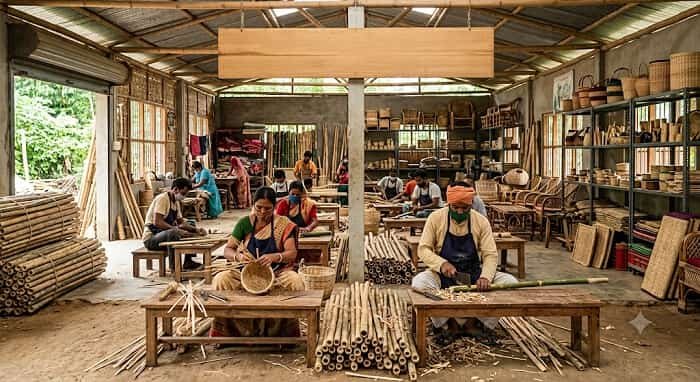
Bamboo is one of India’s most useful natural materials. It grows fast, is strong, lightweight and can be turned into hundreds of products. Earlier, bamboo was mainly linked with baskets, mats, flutes, huts and rural craft items. Now the picture is changing. Bamboo is used in toothbrushes, combs, straws, bottles, home décor, furniture, packaging, corporate gifts, lifestyle products, construction panels and even modern design studios.
India’s bamboo products market is not dominated by only a few giant companies. It is built through startups, artisan groups, state missions, small manufacturers, eco-friendly brands and craft clusters. For this 2026 list, the ranking is based on product range, brand visibility, innovation, market presence, community impact, sustainability focus and importance in India’s bamboo product ecosystem.
Now let’s check out the top 10 bamboo products manufacturers in India in 2026.
1. Amwoodo
Amwoodo is a Kolkata-based bamboo products company founded in 2019. It makes bamboo-based alternatives for everyday use and has built B2B partnerships with major brands such as Himalaya Wellness, Bombay Shaving Company and ITC Hotels. In 2025, the company raised around ₹35–36 crore in pre-Series A funding to expand production capacity and meet growing domestic and global demand.
Amwoodo deserves the first position because it combines bamboo products with scale, funding, B2B demand and sustainability. Its work is not limited to small handicrafts. It is trying to build bamboo as a serious material for modern consumer and hospitality products.
2. Bamboo India
Bamboo India is a Pune-based startup founded in 2016 by Ashwini Shinde and Yogesh Shinde. The company produces eco-friendly alternatives to plastic products using bamboo, including bamboo toothbrushes, bamboo earbuds and corporate gift articles.
Bamboo India is important because it helped bring bamboo products into daily urban life. Items like toothbrushes, pens, speakers, bottles and small gift products made people see bamboo as a modern lifestyle material, not only a rural craft material. Its visibility after Shark Tank India also helped the bamboo product category reach a larger audience.
3. Bambrew
Bambrew is known for eco-friendly packaging alternatives used by brands that want to reduce plastic. Its product area is linked with sustainable packaging, including bamboo-based and plant-based materials, paper mailers, wraps, bags and other alternatives for modern businesses.
Bambrew deserves a high position because packaging is one of the biggest areas where bamboo and plant-based materials can grow. E-commerce, retail, food delivery and consumer brands all need better packaging options. Companies like Bambrew are important because they take bamboo beyond small household products and into business supply chains.
4. Bamboopecker
Bamboopecker is associated with handcrafted bamboo products, home décor, lamps, baskets, kitchenware, storage items, furniture-style products and lifestyle accessories. The brand is popular among buyers who want natural-looking, handcrafted and sustainable products for homes and gifting.
Bamboopecker is important because bamboo home products are becoming more stylish. Urban customers now use bamboo for lampshades, planters, trays, organizers, wall décor and table accessories. Such brands connect artisan-style production with modern interior demand.
5. Bamboo House India
Bamboo House India is connected with bamboo-based structures, furniture, housing elements and rural livelihood support. It has been known for promoting bamboo as a practical material for eco-friendly construction and everyday products.
Its importance comes from a different side of the bamboo industry. While some companies focus on toothbrushes and small lifestyle products, Bamboo House India works more toward bamboo furniture, housing and structural use. This makes it valuable for sustainable architecture and rural enterprise development.
6. Kerala State Bamboo Corporation / Kerala Bamboo Mission-linked Units
Kerala has a strong bamboo craft and bamboo product tradition. The Kerala Bamboo Fest regularly showcases handmade bamboo items from different states, including baskets, trays, lampshades, wall décor, flutes, bags, jewellery, household items and other craft-based products. The 22nd Kerala Bamboo Fest had around 200 stalls and highlighted both traditional and modern bamboo products.
This is included as an ecosystem name because many bamboo products in India are made by artisan groups, self-help groups and cluster-based units rather than one large factory. Kerala’s bamboo mission and bamboo-linked units play an important role in keeping this sector alive.
7. Lagstal Design Studio
Lagstal Design Studio was founded by Sikkim entrepreneur Chimi Ongmu Bhutia and focuses on sustainable design using bamboo. In 2026, her bamboo startup gained national recognition after being praised by Prime Minister Narendra Modi in Mann Ki Baat.
Lagstal is important because Northeast India has huge bamboo potential. The company shows how local bamboo can be used for design-led products, entrepreneurship and regional livelihood. It may not be as big as Amwoodo or Bamboo India, but it represents the creative future of bamboo products in India.
8. Amar Kutir
Amar Kutir is located near Santiniketan in West Bengal and works as a cooperative society for arts and crafts. Its activities include leather goods, kantha products, batik, shola, lac crafts and bamboo crafts.
Amar Kutir is important because India’s bamboo industry is not only about startups. Cooperatives and craft societies have kept bamboo craftsmanship alive for decades. Such organisations help artisans earn income while preserving traditional handmade products.
9. Northeast Bamboo Craft and Processing Units
States such as Mizoram, Assam, Tripura, Nagaland and Arunachal Pradesh have strong bamboo traditions. In 2025, key bamboo processing units were inaugurated at Sairang Horticulture Centre in Mizoram under the National Bamboo Mission to improve value addition and bamboo product marketability. In 2026, Arunachal Pradesh also inaugurated a Bamboo & Cane Technology Centre near Itanagar to promote entrepreneurship and bamboo-based development.
These units are important because they support bamboo furniture, boards, handicrafts, utility products and raw-material processing. For India’s bamboo future, Northeast-based processing centres will remain very important.
10. Maharashtra Bamboo Cluster Units
Maharashtra approved a Bamboo Industry Policy in 2025 with a projected ₹50,000 crore investment and a target to create over five lakh jobs in the next decade. The policy includes 15 bamboo clusters, common facility centres and micro-CFCs to support artisans and small enterprises.
Maharashtra is important because it wants to make bamboo a serious industrial sector. Cluster-based units can support bamboo furniture, boards, handicrafts, biomass use, packaging and other value-added products. This gives Maharashtra a strong place in India’s bamboo product manufacturing ecosystem.
Final Words
India’s bamboo products industry in 2026 is led by a mix of startups, craft brands, cooperatives and state-supported clusters. Amwoodo, Bamboo India, Bambrew, Bamboopecker and Bamboo House India are important in modern bamboo products and lifestyle use. Kerala’s bamboo units, Lagstal Design Studio, Amar Kutir, Northeast bamboo processing centres and Maharashtra bamboo clusters show the craft, regional and industrial side of the sector. As demand for eco-friendly products grows, bamboo manufacturers will continue to play a bigger role in India’s sustainable product economy.